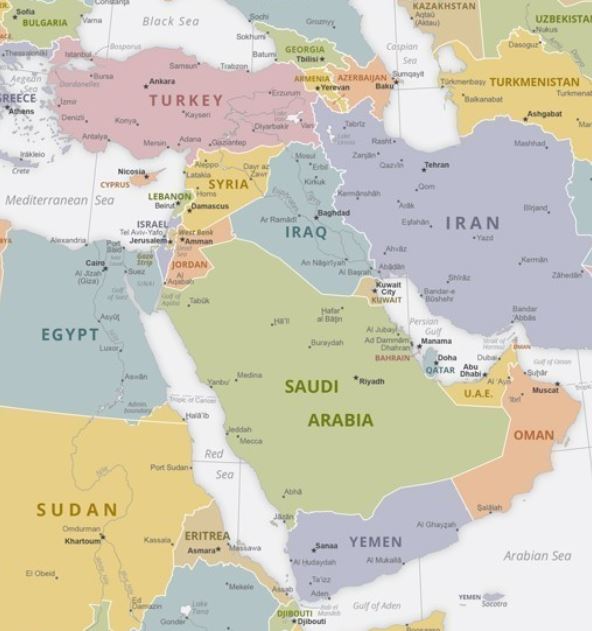
The Crimean War (1853-1856)
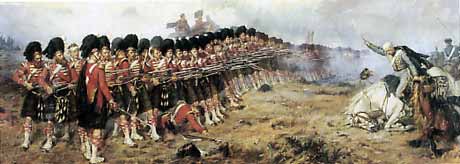
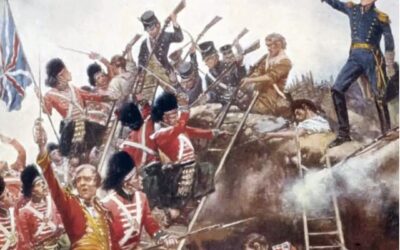
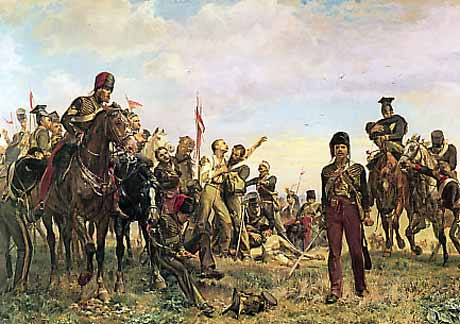
The Thin Red Line of the 93rd Highlanders of the British Army at the Battle of Balaclava
Historians consider the Crimean War to be one of the first truly modern wars for several reasons:
New technologies, and new ways to apply existing technologies to warfare were pioneered in the Crimean war. These modern developments included the first tactical use of railways to transport troops, and the use of the electric telegraph to improve communication between the national leadership of Britain and France to the battlefield commanders in far-off Crimea. The Crimean War also saw an improvement in the care of wounded and ill soldiers through the work of Florence Nightingale and Mary Seacole, two nurses who pioneered modern nursing practices in the British Army.
In terms of new weapons technology, the British and French used the new rifled muskets, thereby increasing accuracy and the deadliness of their fire.
The public back home in Britain were more engaged and informed in this war due to the work of what we now call the news media, in the written reports and photographs of combat submitted by journalists such as William Russell (for The Times newspaper) and Roger Fenton.
Crimean War Statistics and Data:
The Crimean War Began: The Ottoman Empire declared war on Russia on October 23, 1853. France and Britain formally declared war on Russia on March 28, 1854.
The Crimean War Ended: March 30, 1856, with the signing of the Treaty of Paris.
The Crimean War Was Fought Between: The Allies (France, Britain, Sardinia, and the Ottoman Empire vs. The Russian Empire
The Crimean War Also Involved: Rebels in Greek-populated parts of the Ottoman Empire’s Balkan territories staged rebellions against the Ottoman Turks during the Crimean War. In the Russian-occupied Caucasus region, Chechen rebels led by Imam Shamil rebelled in 1853 and 1854.
The Crimean War Resulted In: Allied victory.
The Crimean War Casualties:
French Crimean War Casualties: 95,000 dead (10,240 killed in action, 20,000 died of wounds, and some 60,000 died of disease)
BritishCrimean War Casualties: 21,097 dead (2,755 killed in action, 2,019 died of wounds, and 16,323 died of disease)
Sardinian Crimean War Casualties: 2,050 dead
Ottoman Crimean War Casualties: 175,300 dead
Russian Crimean War Casualties: 450,015 dead
Crimean War Sources and Links:
Crimean War –Wikipedia Article
Crimean War–From the BBC
Copyright © 1998-2023 History Guy Media 10.17.23