Italian-Turkish War (1911-1912)
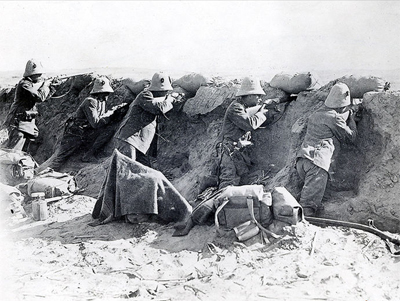
Italian-Turkish War
Italian-Turkish War (1911-1912): Name of Conflict:
Italo-Turkish War
Dates of Conflict:
September 29, 1911- October 18, 1912
Alternate Names of Conflict:
Italian-Turkish War, Italian-Ottoman War , Turko-Italian War, Trablusgarp Savasi (in Turkish), Guerra di Libia (in Italian)
Belligerents: Italy vs. Ottoman Empire (Turkey)
Type of Conflict:
Inter-State, Colonial
Related Conflicts to the Italian-Turkish War:
Predecessor Conflicts: (Related conflicts that occurred before or led up to the current conflict):
Concurrent Conflicts: (Related conflicts occurring at the same time):
Albanian Uprising of 1912 (against the Ottoman Empire)
Successor Conflicts: (Related conflicts which occur later):
First Balkan War (1912-1913)-see also The Third Balkan War
Second Balkan War (1913)
Libyan Resistance to Italian Occupation (1912-1930s)
Causes of the Italian-Turkish War:
The Ottoman Empire, long considered the “Sick Man of Europe,” was the ostensible ruler of the Muslim and Arab-speaking North African provinces of Tripolitania and Cyrenacia (now both known as Libya). Neighboring Egypt was also technically an Ottoman possession, but had been occupied and controlled by the British for decades. The Ottomans thus had no land connection to their Libyan provinces.
Italy, united into one nation only in the 1860s, was late in joining the other nations of Europe in conquering and occupying African land to turn into colonies for the purposes of profit, glory and power. After losing out on a claim to the North African region of Tunisia, Italy turned to Tripolitania and Cyrenacia for imperial expansion.
After securing the complicity or neutrality of the other “Great Powers” of Europe, Italy presented the Ottoman government with an ultimatum on September 28, 1911 demanding that Italy be allowed to occupy Tripolitania and Cyrenacia under the pretext of protecting Italian citizens living there from the alleged threats of Muslim extremists. The Ottomans rebuffed the Italians, but indicated that they were open to negotiations. Obviously anticipating a rejection of their demands, Italy declared war on September 29, 1911.
Description of the Italian-Turkish War:
The Italian Navy transported nearly 50,000 Army troops to the Libyan coast, where they quickly overcame light resistance and occupied the coastal cities. The Ottomans only had light forces on the ground, and were not able to put up an effective resistance. Due to the weakness of their navy, compared to the Italian naval forces, and the declared neutrality of Egypt (which was under British control), the Ottomans were not able to reinforce the defenders in North Africa.
Because of this apparent weakness in the face of Italian aggression, the Ottoman government had to do something to show the ability to resist. This need was largely a result of internal politics inside the sprawling, multi-ethnic empire, where many different groups were looking for an excuse to rebel against imperial government in Constantinople. Unable to actually send an expeditionary force to fight the Italians, nearly 50 Army officers, led by the Young Turks Enver Pasha and Mustafa Kemal, slipped into Libya to provide professional military advice and leadership to the growing local Arab resistance, spearheaded by the Senussi tribe. Within a few short months, the war developed into a stalemated guerrilla conflict, with Italians holding the cities along the coast, and the Turks and Libyan tribes holding the southern deserts.
Unable to break the resistance on land, the Italians used their unchallenged naval superiority to take the war to the rest of the Ottoman Empire. The Italians bombarded the Ottoman ports of Smyrna and Beirut, the forts guarding the Dardanelles (April, 1912) and occupied the Ottoman-held islands of Rhodes and Kos in the Dodecanese Islands chain (May, 1912) in the Aegean Sea.
Faced with these new attacks and with upcoming threats from its enemies in the Balkans, the Turks sued for peace, signing a peace treaty with Italy in Lausanne, Switzerland on October 18, 1912. The First Balkan War, which pitted Serbia, Montenegro, Greece, and Bulgaria against the Ottoman Empire, began the next day.
Consequences of the Italian-Turkish War:
Libya and the Dodecanese Islands passed to official Italian control, though the local Arab population in Libya continued to resist their new rulers for nearly two decades after the Turks left. The Ottomans had no time to worry about their lost North African possessions, as the Balkan Alliance would soon strip them of virtually all of their remaining European lands.
The significance of Italian control over Libya would become apparent during World War Two, when Italy invaded Egypt in an attempt to drive the British out and seize the Suez Canal. This invasion led to over three years of back-and-forth warfare between the Italians and their German allies on one side, and the British on the other. Western Egypt, nearly all of coastal Libya and large parts of Tunisia would become battlegrounds for these quarrelling Europeans, with the local populations the true losers in this part of a vast global conflict.
A significant military development took place in the Italo-Turkish War, with the first ever use of armored cars and the new invention called the airplane. On October 23, 1911, history’s first aerial bombardment took place when Italian pilots dropped hand grenades on a Turkish army encampment.
Casualties of the Italo-Turkish War:
Italy-6,000
Ottoman Empire-14,000
Resources and Sources on the Italian-Turkish War:
Correlates of War (COW) http://cow2.la.psu.edu/
See also: Greco-Turkish Wars
Wars of the Middle East
Sources:
1. Kohn, George C. Dictionary of Wars. New York: Facts On File Publications. 1999
.2. Dupuy, R. Ernest and Trevor N. Dupey. The Harper Encyclopedia of Military History: From 3500 B.C. to the Present
New York, New York: Harper & Row. 1993.



Comments are closed, but trackbacks and pingbacks are open.