India, the world's largest democracy, is a multi-ethnic nation with a great amount of linguistic, ethnic, and religious diversity. However, some ethnic groups in India have, at times, sought to govern themselves with more autonomy from the central government, or even sought full independence. Other, groups, with more political and ideological motivation, such as various communist groups, wage classic guerrilla warfare in an effort to change Indian society. These various internal wars and conflicts of India are listed here, and are updated as developments warrent.
Telangana Rebellion (1946-1951)- A communist-led peasant rebellion broke out in Telengana, a part of the Nizam of Hyderabad, which was a region in south India that declined to join with India at Partition, as the hereditary ruler, the Nizam of Hyderabad, sought union with Muslim Pakistan. The rebellion was a peasant revolt against the feudal landlords of the region and against the Nizam's harsh rule.
Insurgency in Northeast India (1954-Present)- Multiple armed insurgencies conducted by ethnic groups in the seven states of northwest India: operating in India's northeastern states of Assam, Meghalaya, Tripura, Arunachal Pradesh, Mizoram, Manipur, and Nagaland.
Naga Rebellion (1958-Present)-A variety of Naga rebel groups have fought the Indian and Burmese/Myanmar governments on and off since 1958. The Naga War is the oldest of the Northeast Insurgent Conflicts. Some sources Opposition, Insurgency and the Quest --- Rajesh Gopalan have the armed conflict beginning in 1952, with the Indian Army assuming control of operations in 1955. By the end of fifties, the extent of the Naga revolt and of the attempts to crush it can be judged by the fact that fully one-fifth of the Indian army or about 100,000 soldiers were engaged in suppressing what was a total Naga population of some 300,000.Mizoland Rebellion (1966-1986)-This conflict began in March, 1966 with the Mizo National Front uprising, that seized many points in Mizoland., when the conflict ended due to a peace agreement in 1986.
In Mizoram, the movement for independence began in 1961 due to a feeling of total neglect by the State of Assam. The Mizo National Front (MNF) rose in rebellion on February 28, 1966. The Indian army recaptured all of the areas taken by the Mizo National Front, and the war continued as an insurgency until 1986 An agreement was reached between the MNF and the Union Government on June 30, 1986. As a result of the settlement, the MNF agreed to stop fighting.
Manipur Insurgency (1980-Present)-A variety of Manipuri rebel groups have fought India since 1980.
Assam Insurgency (1980-Present)-A variety of Assamese rebel groups have fought India since 1980.
Bodoland Insurgency (1989-Present)-Rebels rebel groups have fought India since 1989 with the goal of an independent Bodoland.
Tripura Insurgency (1990-2012)-Tripuran rebel groups fell apart and ceased operations by 2012.
Insurgency in Meghalaya (1996-Present)-Rebellion in the Indian state of Meghalaya. This conflict is winding down as of 2020 with partial demobilization of rebel groups and peace talks with the government.
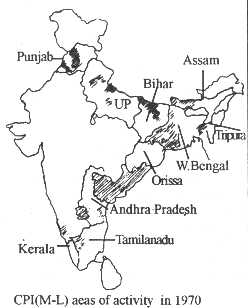
Maoist
Insurgency/Naxalite War
(1967-Present)-A
communist guerrilla war against the government of India.
They further allege that
Andhra police have contributed to the establishment of an armed
vigilante group known as the "Green Tigers," whose mission is to
combat Naxalite groups in the state. The NHRC is investigating
some 285 reported cases of so-called "fake encounter deaths"
allegedly committed by the Andhra police in connection with
anti-Naxalite operations
Threats
- Andhra Pradesh /
The
Subaltern Contribution to the Freedom
Struggle
Opposition, Insurgency and the Quest --- Rajesh Gopalan
Insurgency in the North East of India
Threats - Andhra Pradesh / Naxalite - India Intelligence Agencies