Major Wars and Conflicts of The 20th Century
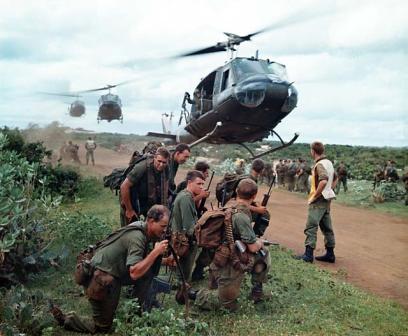
Australian troops in Vietnam
Major Wars and Conflicts of The 20th Century
The 20th Century was the bloodiest, costliest century of warfare in human history. Two world wars, and a large number of major revolutions, along with significant social, political, and economic upheavals made the period from 1901 to 2000 of great importance in a historical and military sense.
Below is a list (with links) of the major wars of the twentieth century. Any such list is by nature somewhat subjective, but the wars and conflicts listed below all had signifcant importance in history. This list of 20th Century wars is presented in rough chronological order, with the earliest listed first, and descending toward the also war-filled 21st Century.
The Second Boer War (1899-1902)--Britain vs. The Boer Republics (Orange Free State and Transvaal) in what is now South Africa.
Somali "Mad Mullah" Jihad (1899-1905)--Somali tribesmen led by religious leader Muhammad ibn Abd Allah Hasan waged a desert guerrilla war against Britain, Italy and Ethiopia. Following repeated defeats by the Somalis, the colonial powers offered him territory in Italian Somaliland in exchange for peace. He resumed his war in 1908 and harassed the occupiers of his country until 1920.
Philippine-American War (1899-1902)--Originally called the "Philippine Uprising", this was a war of independence fought by the Filipinos against the occupying American military. Filipino resistance was ruthlessly crushed.
The Boxer Rebellion (1899-1900)-- The Chinese secret religious and nationalistic Society of the Righteous Harmonious Fists (Boxers), initiated a rebellion against both foreign colonizers, missionaries and their own government in 1899. By 1900, the Chinese government had co-opted the rebels and directed their violent fury entirely upon the foreign presence in China. The Boxers, aided by Chinese Imperial troops, besieged the diplomatic legations (embassies) of the Western powers and Japan, sparking a truly international response. A retaliatory relief expedition composed of troops from: the United State, Great Britain, France, Germany, Italy, Austria-Hungary, Russia and Japan invaded China and captured the capital of Peking (now called Beijing).
Italo-Ottoman War (1911-1912)--(also known as the Turco-Italian War and the Tripolitanian War)--Italy decided to add to its growing African empire by attacking Ottoman-ruled Tripolitinia (Libya). The Italian victory began the very swift fall of the Ottoman Empire which would end with the Empire's disintegration at the end of World War One in 1918. The day after Ottoman Turkey made peace with Italy, the Balkan League attacked in the First Balkan War (see below).
First Balkan War (1912-1913)--The Balkan nations of Montenegro, Serbia, Bulgaria, and Greece defeated the Ottoman Empire, and seized nearly all of the Ottoman Empire's remaining European territories.
Second Balkan War (1913)--The victors in the First Balkan War fell out among themselves, with Bulgaria attacking Serbia and Greece in an attempt to gain more of the spoils from the first war. Rumania, Montenegro, and the Ottomans also joined the war against Bulgaria.
World War One (1914-1918)--The first "official" world war was originally known as "The Great War," and also as "The World War."
The Turkish War of Independence (1919-1922)
Greco-Turkish War (1921-1922)--Greek invasion of Turkey. Is considered part of Turkish War of Independence. The Greek offensive failed. See also the Fall of the Ottoman Empire page
Russian Civil War
Polish-Soviet War (1919-1921)--Major war between Poland and Russia/The Soviet Union.
Sino-Japanese War (1937-1945)-Part of World War Two
Second Italo-Ethiopian War (1935-1936)--(also known as the Abyssinian War)--Italy's Fascist dicator, Benito Mussolini, wanted to conquer a new "Roman Empire," and chose Ethiopia as his first victim. Ethiopia had defeated Italy in the First Italo-Ethiopian War in 1896, and Mussolini sought revenge for that embarrassing Italian defeat. This war exposed the inherent weaknesses of the League of Nations (an earlier and very weak version of the United Nations) when it was unable to prevent war. Italy successfuly conquered Ethiopia in 1936. During World War Two, British, Commonwealth, Free French, Free Belgian, and Ethiopian forces liberated Ethiopia in 1941
Spanish Civil War (1936-1939)--The Spanish Civil War began as a right-wing rebellion against the leftist Republican government of Spain. Led by General Francisco Franco, the Nationalist rebels fought a long and bloody civil war against their Republican foes. Franco was received significant military aid from Nazi Germany and Fascist Italy. The Republican side was aided by the Soviet Union. Franco won the war in 1939 and set up a Fascist government. This war is considered one of the precursor conflicts leading to World War Two.
World War Two (1939-1945)
Cold War (1945-1991)-Worldwide conflict between two alliances, one led by the United States (generally referred to as The West) and the other led by the Soviet Union (generally referred to as The East, or as the Communist Bloc). China was for a time an ally of the Soviets, but broke away in the 1960s, an pursued their own Cold War policies against the West.
Greek Civil War (1946-1949)--The first major military conflict of the Cold War. Communist rebels supported by Yugoslavia and other Communist nations fought against the pro-Western Greek government, which was given significant support by the United States and Great Britain. The war ended with a government victory.
First Indochina War (1946-1954) --The "First IndochinaWar" was really a regional conflict involving France, as the colonial ruler of "French Indochina," against the nationalist (but Communist) rebels seeking independence for Vietnam, Laos, and Cambodia. This war was a part of the Cold War, since in also involved the United States (and to a lesser extent), Great Britain, aiding their ally France, while the Communist rebels (the Viet Minh, Pathet Lao, and Khmer Issarak), enjoyed aid from the Soviet Union and Communist China. Below are the "smaller" conflicts that in part made up the First Indochina War. This war led directly to the Second Indochina War, which in the United States is best known as the Vietnam War.
this conflict included:
French Indochina War (1946-1954) --(known in Vietnam as "The French War")--Communist Viet Minh rebels led by Ho Chi Minh waged a successful war of independence against French colonial forces who re-occupied Indochina following the Japanese defeat in World War Two. The Viet Minh were aided by the Soviet Union and by Communist China. France received significant material support from the United States. France agreed to grant independence to North Vietnam, South Vietnam, Laos, and Cambodia following the Viet Minh victory over French troops at Dien Bien Phu.Pathet Lao War (1950-1954)--Laotian communist forces (The Pathet Lao) were allied with the Viet Minh fought against French colonial forces. Independence achieved after the Vietnamese communists defeated the French at Dien Bien Phu. The Pathet Lao later continued their war against the new Laotian government, finally taking over the country in 1975.
Khmer Issarak War (1950-1954)--Cambodian (Khmer) communist forces allied with the Viet Minh fought against French colonial forces. Independence achieved after the Vietnamese communists defeated the French at Dien Bien Phu. The Khmer communists (Khmer Rouge) later continued their war against the new Cambodian government, finally taking over the country in 1975.
First Kashmir War (1947-1948)--First war between India and Pakistan over possession of Kashmir.
First Arab-Israeli War (1948-1949)-When Israel announced independence in May, 1948, the armies of Egypt, Transjordan, Saudi Arabia, Iraq, Syria, and Lebanon attacked Israel in support of the local Arabs in Palestine/Israel. This began the long-running and current Arab-Israeli Conflict.
Malayan War (1948-1960)-Communist insurgency against the new Malayan government. Britain, Australia, and other Commonwealth nations put down the insurgency in what would be the only outright military victory of the Western powers against the Communists in the Cold War.
Korean War (1950-1953)
Algerian War of Independence (1954-1962)- Algeria won independence from France after a very bloody guerilla war.
Suez War of 1956-This is considered the second major Arab-Israeli War
Second Indochina War (1956-1975) --The so-called "Vietnam War" was really a regional and international conflict involving not just North and South Vietnam and the U.S. but also embroiling Laos, Cambodia, Thailand, South Korea, Australia and New Zealand. Below are some of the "smaller" conflicts that in part made up the Second Indochina War.
The Indochina conflict included:
Vietnam War (1956-1975)--The Communist North Vietnamese and the southern Viet Cong engaged in a long war to overthrow the pro-American government of South Vietnam. The U.S. and other allied nations sent troops to aid the Saigon regime. The last U.S. combat troops left in 1973 and Saigon fell to the North Vietnamese on April 30, 1975. Known in the U.S. and much of the world as "The Vietnam War." Known in Vietnam as "The American War."Laotian Civil War (1959-1975)--North Vietnam sent large numbers of troops into Laos to aid the Communist Pathet Lao against the U.S.-backed Royal Laotian government. The Pathet Lao seized power in 1975 and maintains a good relationship with Hanoi.
Cambodian Civil War (1967-1975) --North Vietnam sent large numbers of troops into Cambodia to aid the Communist Khmer Rouge against the U.S.-backed Cambodian government. The North Vietnamese Army (NVA) had maintained a large presence in eastern Cambodia for years prior to the beginning of the Khmer Rouge war in 1967. Following the fall of the U.S.-backed governments in Cambodia and South Vietnam, the two former Communist allies engaged in warfare between themselves. (See below).
Yemen Civil War (1962-1970)-- Egypt sent troops to support the Yemeni Republican government against Royalist rebels supported by Saudi Arabia. This was a major rift in the Arab world.
Sino-Indian War (1962)--Short but bloody border war between China and India.
Second Kashmir War (1965)--Second war between India and Pakistan over Kashmir.
Six-Day War (1967)-- Israel defeated the combined forces of Egypt, Jordan, Syria, and Iraq in six days. This is considered the 3rd major Arab-Israeli War. Israel captured the Gaza Strip and Sinai Peninsula from Egypt, the West Bank and East Jerusalem from Jordan, and the Golan Heights from Syria.
Warsaw Pact Invasion of Czechoslovakia (1968)--The armed forces of the Communist Warsaw Pact (Soviet Union, East Germany, Poland, and Hungary) invaded Czechoslovakia to bring down a reformist Czech government.
Bengali War of Independence (1971)--Can also be considered a Pakistani civil war. East Pakistan rebelled against West Pakistan, seeking independence. India intervened and helped East Pakistan break away and become the new nation of Bangaladesh.
Yom Kippur War/Ramadan War (1973)--Egypt and Syria launched a surpise attack on Israeli forces in the occupied Sinai and Golan Heights. While the Arab nations failed to re-capture these territories, this conflict eventually led to the 1979 Egypt-Israel Peace Treaty.
Lebanese Civil War (1975-1991)
Ogaden War (1977-1978)- Ethiopia against Somalia and Somali rebels in the Ogaden desert area. The Soviet Union provided huge amounts of material and logistcal support and Cuba sent thousands of troops to fight on Ethiopia's side. This war was a part of the Cold War.
Third Indochina War (1977-1989) this conflict included:
Cambodia-Vietnam War (1977-1991)--During their war against the U.S.-sponsored regimes in Saigon and Phnom Penh, the North Vietnamese and the Khmer Rouge were able to mask their ideological differences and ignore the historical hostility between their two peoples. After taking power though, these differences turned violent. Beginning with low-level cross-border raids and escalating into full-fledged war in late December of 1978 when Vietnam launched a massive conventional invasion of Cambodia, swiftly occupying the nation within days. Vietnam set up a new government in Phnom Penh with Khmer Rouge defectors but found itself immersed in a long and difficult war of occupation as the Khmer Rouge returned to the guerrilla warfare they knew so well. Vietnamese troops left after more than a decade, with the friendly government of Heng Samrin in control of most of Cambodia.China -Vietnam War (Feb. 17-Mar. 16, 1979)-- Similar to the difficulties between Cambodia and Vietnam, the Hanoi regime enjoyed good relations with China during the war against the United States and South Vietnam, but once that conflict ended, ideological and historical differences interfered with Sino-Vietnamese relations. Using the Vietnamese invasion of Cambodia as a pretext, China launched a massive attack along their common border. Vietnam's border troops put up a very good defense, causing major casualties to the Chinese People's Liberation Army (PLA). Within a month of the invasion, China basically declared that it had taught Hanoi a lesson and withdrew. Results of this war include: moving Hanoi closer to the Soviet Union, which was a rival of China; a modernization of the PLA as China realized they did not do very well against a smaller country; and the beginning of a long-lasting but low-level border conflict with between Vietnam and China. (See below).
China-Vietnam Border Clashes (1979-1988)--After the Chinese invasion of Vietnam in 1979, continued warfare and infiltration along the border kept these two neighbors in a state of low-level warfare. The two Communist neighbors now maintain cordial relations, but further research is needed to ascertain when the cross-border raids and artillery exchanges ended.
Thai-Laotian Border Clashes (1980, 1984, 1987)
Afghan Civil War (1978-Present)
Iranian Hostage Crisis (1979-1981)--Though technically not a war, this was a major crisis that nearly brought the U.S. and Iran to war, and the repercussions of this conflict are still felt today. (see Iran War Scenarios for more information on the recent issues between America and Iran)
Soviet Invasion of Afghanistan (1979-1989)
Iran-Iraq War (1980-1988)
Falkland Islands War (1982)
Israeli Invasion and Occupation of Southern Lebanon (1982-2000)
Invasion of Grenada (1983)
Gulf War (1991)